
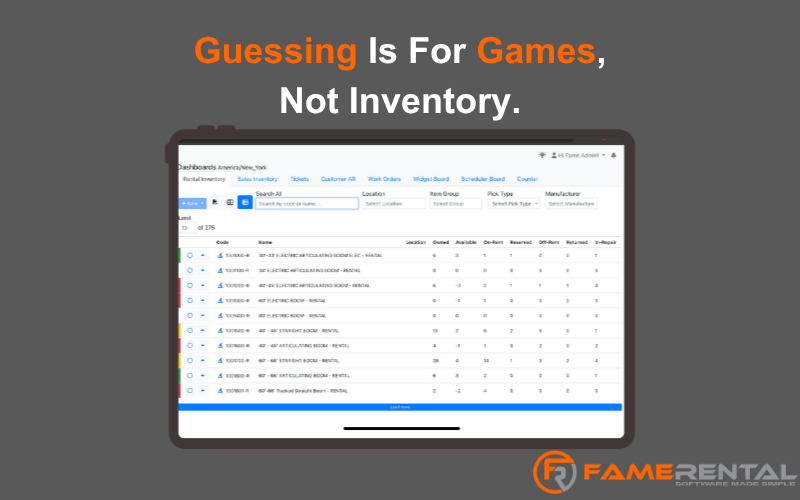
Maximizing Profits with Smart Inventory Management
Most rental companies rely on their inventory, whether for equipment rentals, retail sales, or maintenance parts. Having the right inventory level for each item is a make-or-break factor for maximizing margins, customer experience, technician productivity, and machine uptime. Getting this balance right isn’t optional – it determines whether your business thrives or struggles.
See how FameAir handles inventory management
The Real Impact of Poor Inventory Management
Poor inventory management hurts your business in multiple ways. 10% of retail sales are lost due to stockouts. 30% of inventory sits idle for over 6 months. For maintenance teams, 15% of work orders get delayed waiting for parts. If products aren’t available, you lose sales and customer trust. If you overstock, you waste money and space. Getting this balance right takes a proper inventory system.
Lost Sales and Customer Trust
When customers can’t get what they need when they need it, they don’t just walk away from a single sale – they often walk away from your business entirely. In today’s competitive market, customers expect immediate availability.
Financial Implications of Overstocking
Excess inventory ties up capital that could be better invested elsewhere in your business. It also increases storage costs, risk of obsolescence, and can lead to unnecessary write-offs.
Moving Beyond Spreadsheets
Many rental businesses still attempt to manage inventory using disconnected systems:
- Isolated spreadsheets
- Separate databases
- Multiple cloud applications
This fragmented approach makes achieving a unified view impossible. Without accurate, data-driven insights, inventory decisions remain suboptimal.
The Evolution of Modern Inventory Management
Today’s leading rental companies have moved beyond static minimum and maximum stock levels. Modern systems calculate optimal inventory dynamically, considering:
Dynamic Inventory Calculations
- Variable lead times
- Seasonal demand patterns
- Item criticality
- Multi-location requirements
Rethinking Traditional Stocking Strategies
With next-day delivery becoming standard for many items, smart companies are rethinking traditional stocking strategies. Non-critical items can be ordered as needed or transferred from a central warehouse, reducing overall inventory requirements.
Real-Time Inventory Control
Maintaining accurate stock levels requires:
- Recording all inventory movements as they happen
- Regular physical verification through cycle counting
- Mobile-friendly tools with barcode scanning capabilities
Companies using mobile inventory management solutions report significant improvements in accuracy and efficiency, with some reducing excess inventory by up to 25%.
Implementation Steps for Immediate Results
Start your inventory optimization journey with these actionable steps:
- Assess your current inventory management maturity
- Identify your most frequent pain points (stockouts or excess)
- Implement tools that provide unified inventory visibility
- Develop dynamic stocking policies based on actual demand
- Establish regular cycle counting procedures
Remember, successful inventory management isn’t about maximum stock levels – it’s about optimal stock levels. Getting the right balance takes a system that ensures the right items are available when and where they’re needed, leading to better margins and customer satisfaction.
Joe Lewis
CEO
Fame Rental
Fame Rental improves rental businesses and the lives of their employees and customers. We do this because we care more deeply, listen more intently, and act more methodically than anyone in the rental industry would ever expect from a software company.
Contact us at sales@fameintelcom to schedule a demo.



0 Comments